Advertised 60 miles, real 28? How to read a battery spec before you buy
Mill Road Rise- Subject
- choosing, sizing and living with an electric bicycle used for adult everyday transport
- Editor
- The Mill Road Rise team
- Subject
- choosing, sizing and living with an electric bicycle used for adult everyday transport
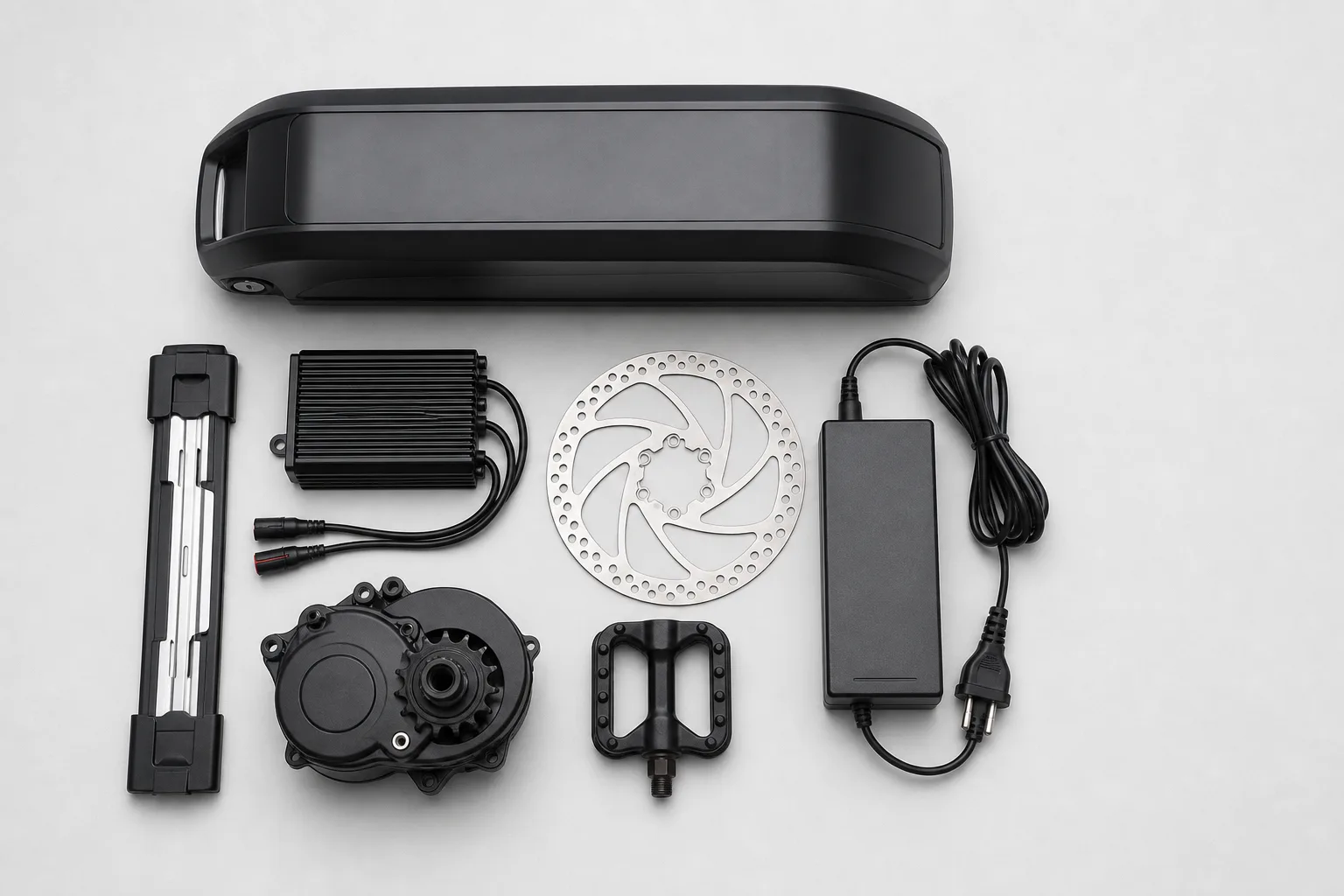
Volts multiplied by amp-hours gives the energy in the pack, a figure no marketing department can stretch. Compare bikes on that number before you compare any advertised range.
Two bikes on the same shop floor both claim sixty miles. One carries a 500 watt-hour battery, the other 720. They cannot both be right about the same rider, and neither claim is a lie exactly, because each was produced under whatever conditions made the number largest. The useful move is to ignore the mileage on the placard entirely and work from the energy in the pack, which is a physical quantity that does not flatter anyone. A careful reader checks the watt-hours first, then asks what the bike does with them.
Where the advertised number comes from
Range figures are almost always generated at the lowest assist level, on flat pavement, in still air, at a moderate temperature, with a light rider pedaling steadily and the tires at maximum pressure. Some are measured on a test rig rather than a road. Nothing about that is fraudulent, but it describes a ride nobody takes. The gap between that test and a February commute with a headwind, a backpack, cold cells and two overpasses is not ten percent. It is frequently half. Treat the claim as an upper bound produced under ideal conditions and move on to the arithmetic.
Turning watt-hours into miles you can plan around
Watt-hours are volts multiplied by amp-hours, so a 48 volt pack rated at 14 amp-hours holds roughly 672 watt-hours. That is the whole tank. What varies is consumption per mile, and the honest way to size a bike is to pick a consumption figure that matches your actual life rather than the brochure's. A light rider on flat ground using minimal assist may spend somewhere in the mid-teens of watt-hours per mile. A heavier rider, a loaded rack, real hills and a high assist setting can easily push that into the thirties. Throttle-dominant riding on a fat-tire bike runs higher still.
Divide the pack size by the consumption figure and you get a range that will not embarrass you. Six hundred seventy-two watt-hours at thirty per mile is about twenty-two miles, not sixty. Then subtract a reserve, because the last stretch of a lithium pack sags under load and the assist weakens before the display admits anything is wrong. Planning to arrive with a fifth of the battery left is not timidity, it is the difference between a commute and a rescue. If the round trip needs more than that, buy the larger pack now rather than a second battery later.
Charging habits that decide how long the pack lasts
Two riders with identical bikes can end up three years apart in battery health, and the difference is almost entirely charging behavior. Cells age faster when they sit at full charge, faster again when they sit fully depleted, and faster in heat than in cold. The rider who tops up to eighty or ninety percent for a short commute, charges indoors at room temperature, and stores the bike over winter at roughly half charge in an unheated but dry space will keep useful capacity considerably longer than the rider who leaves it plugged in on the balcony at one hundred percent year round. Use the charger that came with the bike.
Certification matters here in a way it rarely does elsewhere on a bicycle. The Consumer Product Safety Commission is the federal body responsible for consumer product safety, including electric bicycle batteries and chargers, and it has been active on the subject of lithium-ion packs sold to American riders. Look for a battery and charger tested to a recognized safety standard, bought from a manufacturer who still exists and still sells replacement packs for the model you are buying. A proprietary battery from a brand that vanishes is a bike with a two-year lifespan and a nice frame.
What empty actually feels like on a 55-pound bike
A dead battery does not strand you, but it changes the machine. Fifty-five pounds with a rack and a lock is rideable on flat ground in a low gear at eight or nine miles an hour, tiring across town, and genuinely unpleasant on a sustained climb. Mid-drive bikes coast better than most geared hub motors, and a direct-drive hub adds noticeable magnetic drag. Check, before you buy, that the gearing goes low enough to pedal the thing unpowered, and that the bike fits on a bus rack or in a trunk if the day goes badly.
Buy the pack that covers your worst weekly ride with a fifth left over, charge it gently, and the range question stops being a question at all.
Ideal-condition testing. Range claims are typically produced at the lowest assist setting, on flat ground, in mild weather, with a light rider. Real commuting rarely resembles the test.
Consumption per mile. Light riders on flat terrain with minimal assist may use somewhere in the mid-teens of watt-hours per mile. Hills, cargo and high assist can double that figure.
The twenty percent reserve. Voltage sags near the bottom of a lithium pack and assist weakens before the display shows empty. Plan routes to finish with about a fifth remaining.