Rear hub or mid-drive? What to check before you buy the bike you'll ride up a hill
Mill Road Rise- Subject
- choosing, sizing and living with an electric bicycle used for adult everyday transport
- Editor
- The Mill Road Rise team
- Subject
- choosing, sizing and living with an electric bicycle used for adult everyday transport
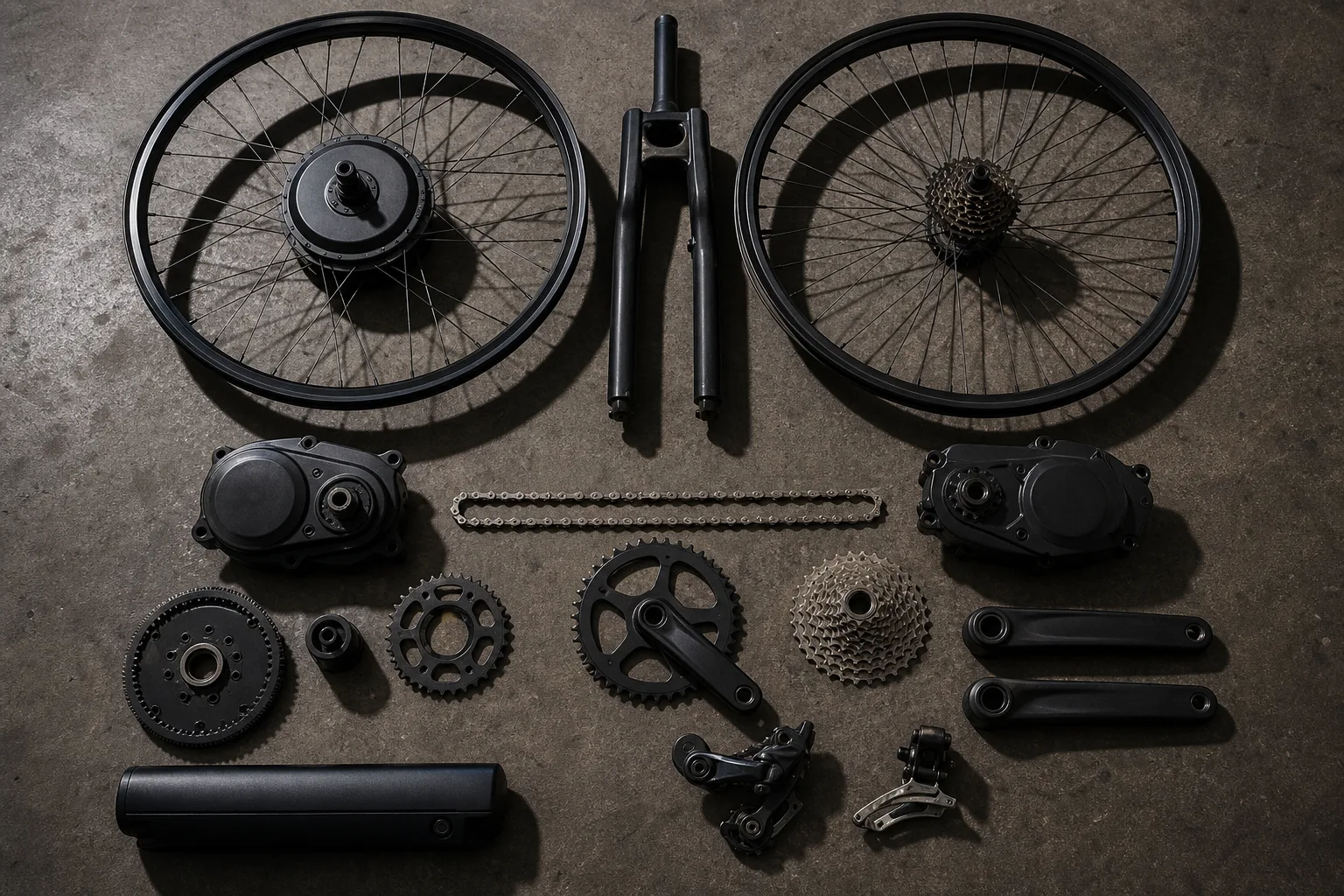
On level pavement at moderate speed both motor types feel smooth and similar. The difference only appears once the wheel slows under sustained grade.
The two common places to put a motor on a commuting electric bicycle produce bikes that feel almost identical on flat pavement and quite different on a sustained climb, which is why a flat test loop around a shop parking lot tells you very little. A rear hub motor drives the wheel directly, independent of the chain, at whatever speed the wheel happens to be turning. A mid-drive motor pushes on the crank or the chainring, so it inherits your gearing. That single structural difference explains most of what follows: the sensing, the wear, the noise, and the feel at 8 percent.
Direct wheel drive versus geared drive, and why grade exposes it
On level ground at 15 miles per hour, a rear hub motor sits near the middle of its efficient range and feels smooth, quiet and effortless, which is exactly the impression a short showroom ride leaves. Point the same bike up a steady 8 percent grade and the wheel slows, the motor slows with it, and current climbs while output falls, so heat builds and thrust fades just as you need more of it. A mid-drive motor in a low gear keeps spinning fast while the wheel crawls, because the cassette multiplies its torque the way it multiplies yours. Shift down and the motor stays in its happy band. That is the whole argument.
The practical check is to find the steepest hill within a mile of the shop, ride it at a pace you would actually hold on a commute, and notice three things: whether speed stabilizes or keeps bleeding away, whether the motor housing is hot at the top, and whether the assist cuts back before you crest. A hub motor sized generously and geared internally can climb respectably. An underspecified one will not, and no amount of watt-hours in the battery fixes it.
Cadence sensing and torque sensing feel different on the same motor
A cadence sensor counts pedal rotations and asks for a preset level of power once you are turning the cranks, which on flat ground is pleasant and predictable, and on a climb produces a lag between your effort and the motor's answer. A torque sensor measures how hard you are pressing and scales assist to that, so the bike responds within a pedal stroke, holds a line when you stand up on a steep pitch, and does not surge from a stop. On an 8 percent grade the difference is stark: cadence sensing wants you to spin to earn power, torque sensing rewards the shorter, harder strokes you naturally use. Ask which sensor the bike has, then confirm it by pedaling slowly and pressing hard.
What each arrangement does to the chain, the cassette and your ears
Every watt a mid-drive produces travels through the chain, the chainring and the cassette, which is why those parts wear noticeably faster than on an unassisted bike and why owners of mid-drives learn to check chain stretch with a gauge rather than by feel. Expect more frequent chain replacement, and expect to shift deliberately, easing pressure before the shift so the derailleur is not fighting several hundred watts. A rear hub bypasses the drivetrain entirely, so your chain wears at roughly human rates. On noise, most mid-drives emit a mechanical whir under load that rises with output, while direct-drive hubs are nearly silent and geared hubs sit somewhere between with a faint whine and occasional freewheel clatter.
The checks that actually predict how the bike will behave
Ask for rated and peak power, then ask for rated torque at the wheel rather than at the motor, because a mid-drive's crank torque figure means nothing until you know the gearing. Look at the cassette range: a wide-range cluster with a very low bottom gear is what lets a mid-drive climb without cooking. Check where the weight sits, since a hub motor puts several pounds behind the rear axle and changes how a loaded bike handles on a wet corner. Ask whether the shop stocks the specific motor's spare parts, and who opens the case when it fails. The Consumer Product Safety Commission oversees safety requirements for electric bicycles sold in the United States, and a dealer who can speak clearly about compliance usually knows the rest of the product too.
Both layouts work for daily transport, and plenty of riders on flat routes would never notice the distinction. Grade is the variable that decides. Pick the hill you climb most often, ride both bikes up it at commuting pace, and let the bike that arrives at the top still pulling make the choice for you.
Motor speed on a climb. A hub motor turns as slowly as the wheel does, so on a steep pitch it drops out of its efficient range and heats up. A mid-drive keeps spinning quickly in a low gear regardless of road speed.
Gearing multiplies motor torque. A mid-drive borrows the cassette the same way your legs do, so shifting down increases what the motor delivers at the tire. A hub motor has no such leverage unless it has internal reduction gearing.
Rated torque, measured where. Crank torque figures for mid-drives are not comparable to wheel torque figures for hub motors. Ask which the number refers to before comparing two bikes.